



One-to-One Specialist Appointment
Feel confident in the care you receive. Our specialists can interpret your scan and provide comprehensive advice if necessary.

£525
How the Injection Helps
Feel confident in the care you receive. Our specialists can interpret your scan and provide comprehensive advice if necessary.

You do not require a referral before booking an appointment with our clinic, giving you back complete control of your health.

A specialist musculoskeletal doctor, an expert in precision targeting of the affected area using ultrasound guidance, will perform your procedure with a report on the same day.

Following your appointment, a complete digital report of your Ultrasound examination will be emailed to you directly and securely.

In addition to the report, images of your scan will be sent for you to share with a healthcare specialist of your choice.
A Morton’s neuroma is a thickening of the tissue around one of the small nerves that run between the long bones of the foot, most commonly between the third and fourth toes. As the nerve becomes irritated and enlarged, it causes pain in the ball of the foot that can radiate into the toes.
It is usually caused by repeated irritation or compression of the nerve. Tight or narrow footwear, high heels, running and sports that load the forefoot, and certain foot shapes all make a neuroma more likely. It is not a tumour and it is not dangerous, but it can become steadily more painful if the irritation continues.
The classic symptom is a burning or sharp pain in the ball of the foot, often radiating into the third and fourth toes. Many patients describe the sensation of standing on a pebble or a bunched-up sock, numbness or tingling in the affected toes, and pain that gets worse in tight shoes or with time on your feet.
Symptoms are often relieved, at least at first, by taking the shoe off and massaging the foot. If that pattern sounds familiar, an ultrasound assessment can confirm whether a neuroma is the cause.
Your appointment begins with a consultant assessment of your symptoms and footwear history, followed by a diagnostic ultrasound scan of the forefoot. Ultrasound shows the neuroma directly, confirms which nerve is affected and measures its size, which helps guide treatment.
The scan also checks for other causes of forefoot pain that can mimic a neuroma, such as bursitis, capsulitis or a stress reaction in the metatarsal bones, so you leave with a clear diagnosis rather than a guess.
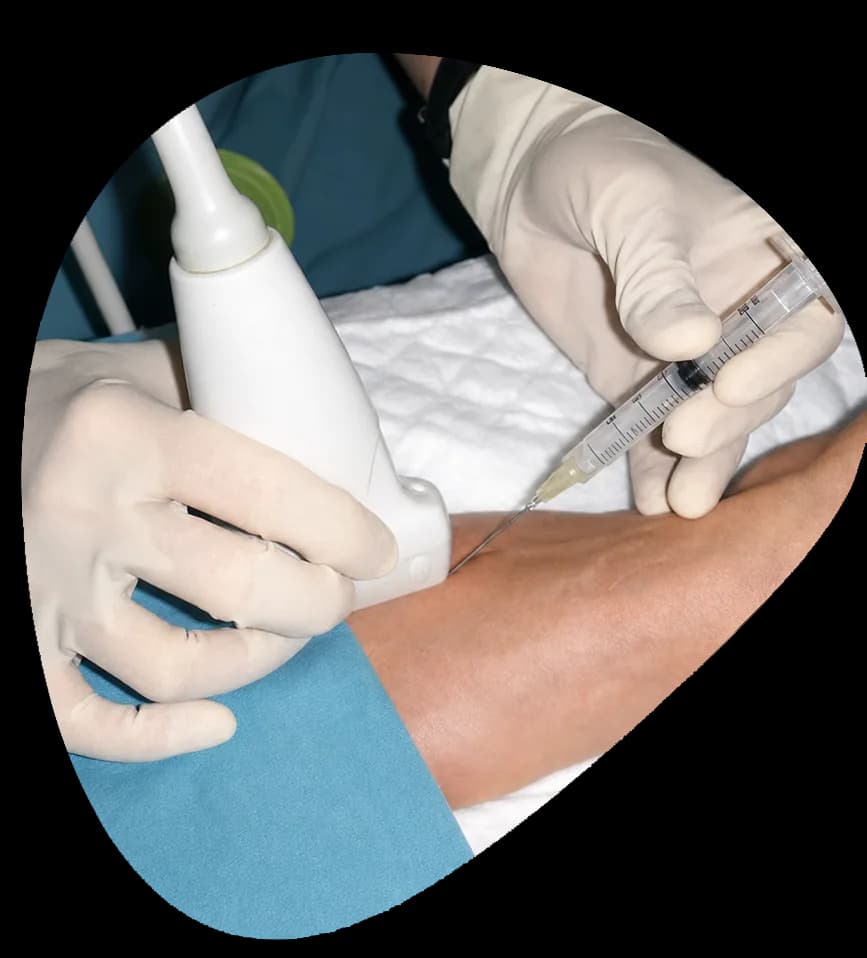
A steroid (cortisone) injection is delivered with a local anaesthetic under real-time ultrasound guidance, placed precisely around the affected nerve. The steroid reduces the inflammation and swelling of the nerve, which relieves the burning pain and tingling.
Because the injection is guided by ultrasound, your consultant can see the needle, the neuroma and the surrounding structures throughout the procedure. That precision is what makes the treatment effective while protecting the nearby tendons, blood vessels and the fat pad under the foot.
Most patients tolerate the procedure very well. A local anaesthetic is used, so you may feel a brief sting followed by pressure rather than pain. The injection itself takes only a few minutes, and the whole appointment, including your assessment and diagnostic scan, is usually complete within 30 to 45 minutes.
You can walk immediately afterwards and go home the same day. The area may feel numb for a few hours while the anaesthetic wears off, and occasionally a little sore for a day or two.
Your injection is performed by a consultant musculoskeletal doctor, an expert in ultrasound-guided injections of the foot and ankle. The same consultant carries out your assessment, performs the diagnostic scan, delivers the injection and explains your report.
If your ultrasound shows that a neuroma is not the cause of your pain, or that an injection is not the right treatment for you, your consultant will explain exactly what has been found and what to do next.
You will still receive your full written report and a tailored plan, whether that is footwear changes, orthotics, a different targeted treatment or an onward referral. You are never given a procedure you do not need.
The local anaesthetic often eases the pain within minutes, which also helps confirm the diagnosis. The steroid then takes effect gradually over the following days, with the full benefit usually felt within one to two weeks.
Relief commonly lasts several months, and for smaller neuromas a single injection combined with footwear changes can settle symptoms for much longer. If pain returns, your consultant will discuss whether a repeat injection or another approach is more appropriate.
Recovery is straightforward. We advise taking it easy for 24 to 48 hours, avoiding tight footwear and high-impact activity, and then returning to normal activity gradually.
Your written report includes tailored aftercare guidance, and your consultant will advise on wider-fitting footwear, metatarsal padding or orthotics to reduce the chance of the neuroma flaring up again.
First-line treatment is always conservative: wider footwear, metatarsal pads and orthotics to take pressure off the nerve. An ultrasound-guided steroid injection is the usual next step when symptoms persist, and it is far less invasive than surgery.
Surgery to remove the neuroma (neurectomy) is generally reserved for cases that do not respond to injections, as it leaves permanent numbness in the affected toes. Many patients avoid surgery altogether with a precisely placed injection and the right footwear changes.
An ultrasound-guided steroid injection for Morton’s neuroma at The Harley Street Ultrasound Group is £525, all fees inclusive. There are no extra charges for the consultant assessment, the diagnostic ultrasound, the procedure itself, or your written report.
What’s included in the price:
There is no referral required and no waiting lists.
Coming to us privately does not affect your NHS care. Our goal is to get you answers and treatment quickly, without the long waits often involved in accessing injection therapy on the NHS.
You are seen by a consultant specialist who can assess, diagnose and, where appropriate, treat your heel pain in a single visit. Your report and images can be shared securely with your NHS GP or any specialist, and if your situation needs onward NHS care your consultant will write to your GP accordingly.
We don’t want you waiting months in pain when effective treatment is available now.
Our team are fully registered and regulated for practice in the United Kingdom. Our patients should expect nothing less.





We can provide scan images directly to your smartphone, often on the same day following your appointment. Gain the peace of mind and insight you need, without delay.
Same-Day Results
Timely & Efficient
Share with your Doctor
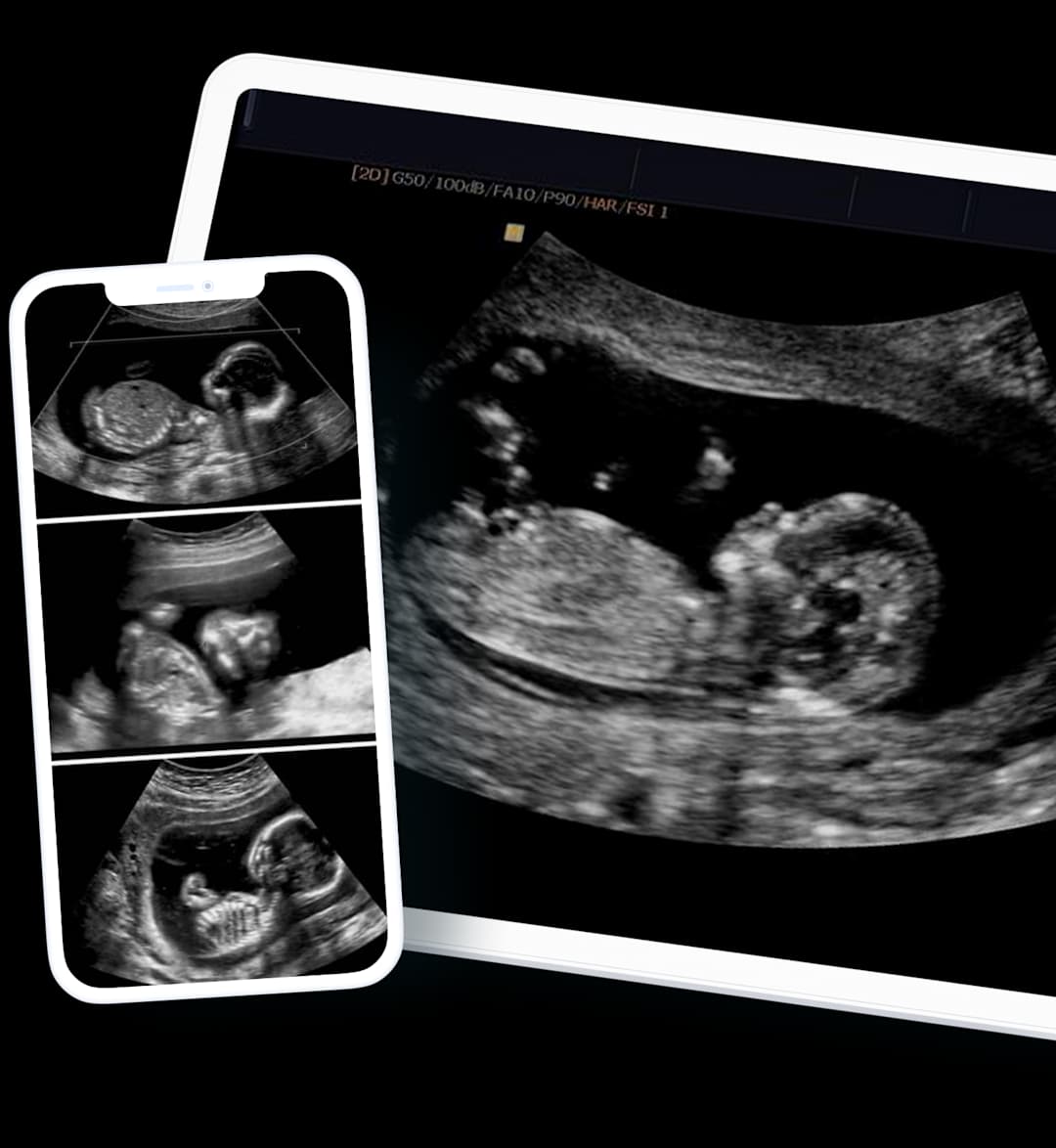
We provide insight on a range of topics, including the latest news affecting our practice.
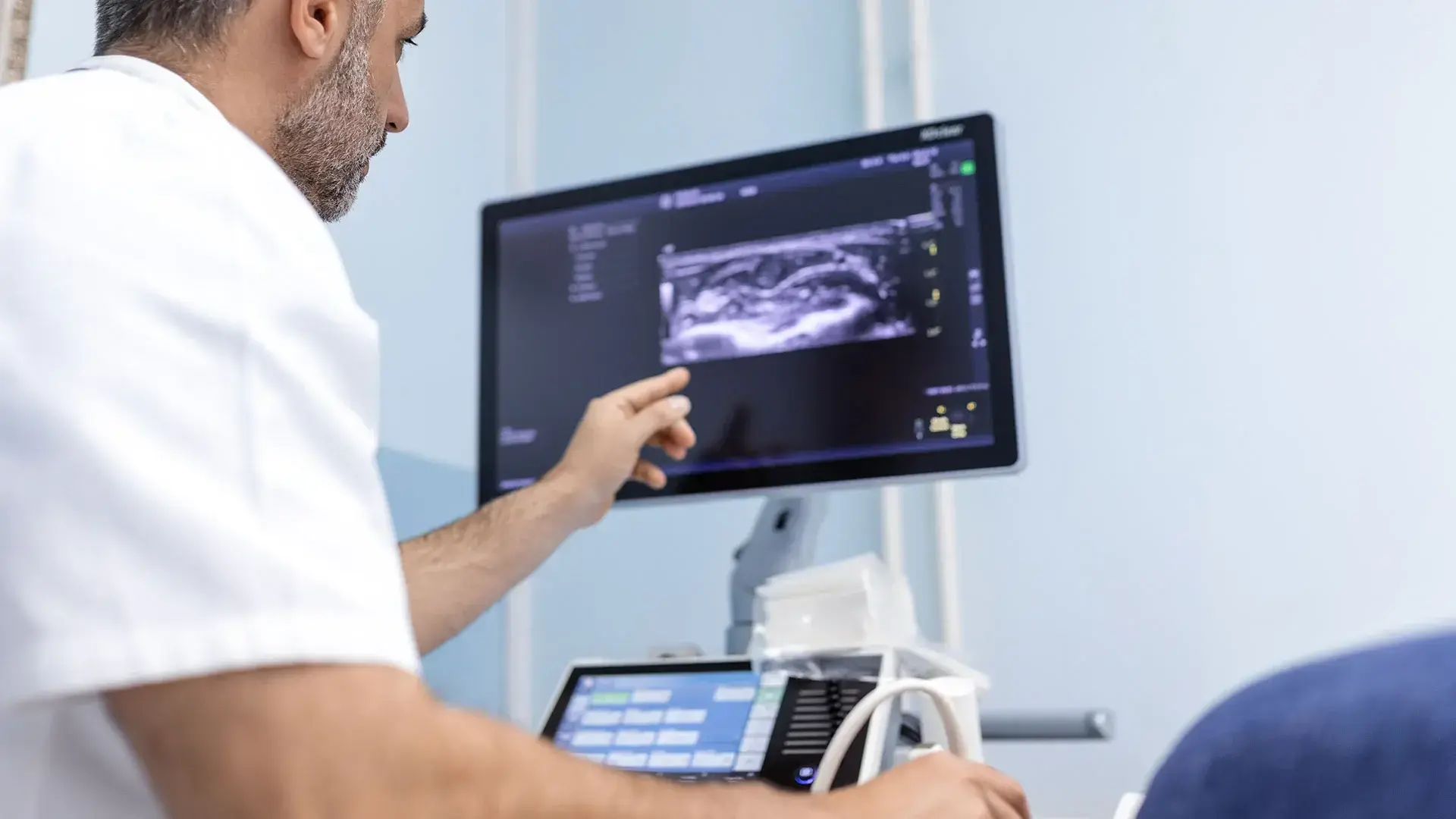
Dr Tahir Hussein · May 2, 2023
Testicular ultrasounds are a safe and non-invasive way for doctors to assess and diagnose abnormalities in the testicles. If you’re anxious about the procedure, don’t worry—it’s natural to feel that way.
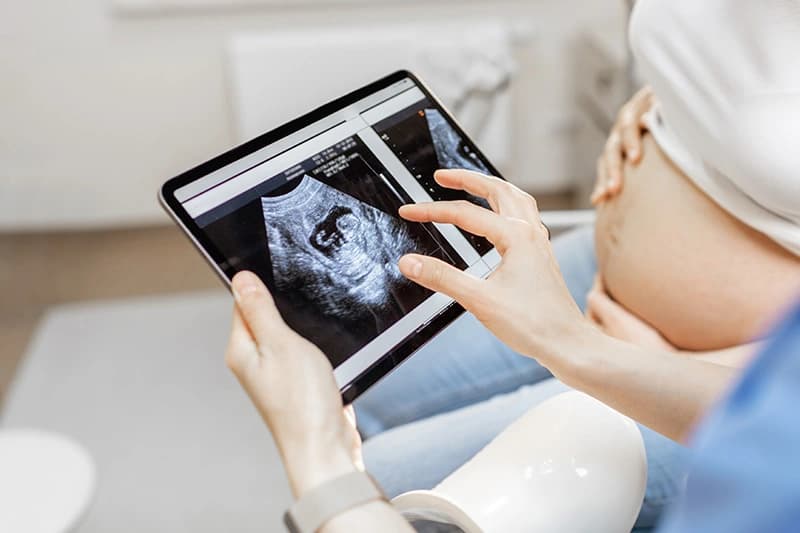
Heba Alkutbi · February 8, 2024
Pregnancy is a journey filled with moments of joy and anticipation, and the anomaly scan—or anatomy scan—is a significant and exciting milestone. This article will guide you through what an anomaly scan is, what to expect during the procedure, the findings you might encounter, and how to interpret the results.

Heba Alkutbi · April 23, 2023
A commonly used test is the Non-Invasive Prenatal Test (NIPT), also known as the Prenatal Test. The test is designed to screen the foetus for genetic conditions and chromosomal abnormalities.

The team at Harley Street Ultrasound Group is made up of Specialist Consultants and Specialist Sonographers you can rely upon. They are among the best in the industry.
This is backed up with a full range of qualifications and accreditations. All of our specialists are fully registered with all applicable medical regulatory bodies.

We are committed to providing a high standard of care to our patients. Take a look at some of the incredible responses we have received.