



One-to-One Specialist Appointment
Feel confident in the care you receive. Our specialists can interpret your scan and provide comprehensive advice if necessary.


£350
Your Ultrasound Checks For

Feel confident in the care you receive. Our specialists can interpret your scan and provide comprehensive advice if necessary.

You do not require a referral before booking an appointment with our clinic, giving you back complete control of your health.

We aim to provide results to you on the day of your visit. Our Specialist Senior Sonographers will explain their findings during your ultrasound examination.

Following your appointment, a complete digital report of your Ultrasound examination will be emailed to you directly and securely.

In addition to the report, images of your scan will be sent for you to share with a healthcare specialist of your choice.
A baby hip ultrasound is recommended when there is a higher chance of developmental dysplasia of the hip (DDH), a condition where the hip joint has not formed quite as it should. Your baby may be offered a scan if:
A scan is the reassuring next step in all of these situations. Picking up DDH early means it can usually be treated simply and gently, so most babies go on to develop completely normal hips.
Developmental dysplasia of the hip (DDH) describes a hip joint that has not developed normally in a baby. The hip is a ball-and-socket joint, in DDH the socket can be too shallow, or the ball can sit loosely in it or slip out of place altogether.
DDH is found in a small number of babies and is more common in girls, in first-born babies, and in babies who were breech. It is not painful for your baby and it does not stop them moving normally, which is exactly why a scan is so valuable, as it can spot a hip that needs help before there are any outward signs.
The good news is that when DDH is found early, treatment is usually straightforward and very effective, and the large majority of babies need nothing more than gentle support for a few weeks.
A baby hip ultrasound uses safe, gentle sound waves, with no radiation and no needles. A small amount of warm gel is applied to the side of the hip and a smooth, hand-held probe is moved gently over the area.
We use the trusted Graf method, the international standard for assessing infant hips. The sonographer measures specific angles (the alpha and beta angles) that show how well the hip socket has formed and how securely the ball sits within it, and gently checks the joint for stability.
The whole assessment takes only a few minutes per hip and is best done while your baby is settled or feeding. Because ultrasound carries no health risks at all, you can relax and stay close to your baby throughout.
The appointment is calm, gentle and unhurried. Your baby’s comfort comes first. You are welcome to stay right beside your them for the whole scan, and to feed or settle them at any point.
Here is what usually happens:
The scan itself takes only a few minutes per hip and there is nothing uncomfortable for your baby.
A baby hip ultrasound needs very little preparation, and there is nothing your baby has to do beforehand. The most helpful thing is simply to have a settled, content baby, so it often works well to plan the appointment around a feed or a nap.
It helps to dress your baby in loose, easy-to-remove clothing such as a babygro, as the lower half will be undressed for the scan. Bring a spare nappy, a muslin and a feed (breast or bottle) so you can settle your baby quickly if needed. Feeding during the scan is absolutely fine and often keeps babies calm and still.
There is nothing to fast for and no medication to stop. If your baby is unwell on the day, just let us know, we are always happy to rearrange.
Yes, a baby hip ultrasound is completely safe and gentle. It uses only sound waves, exactly like the scans used during pregnancy, with no radiation, no needles and no contrast. There are no known risks and no side effects, so it is suitable even for the smallest newborn.
Your baby will not feel anything beyond the light touch of the probe and a little warm gel. There is no recovery time and nothing to look out for afterwards. Once the scan is done your baby can feed, sleep and carry on completely as normal.
You shouldn’t have to wait for important answers about your baby’s health. That’s why, at the Harley Street Ultrasound Group, we give you same-day results.
Your specialist senior sonographer will talk you through what they can see during the scan itself, so you leave the room with an understanding of your baby’s hip findings. Your full medical report with tailored advice and any recommended next steps will be ready the same day, along with high-resolution digital images of the scan.
You can view and share both the report and the images securely from any internet-connected device, including your phone, and forward them directly to your GP, health visitor or a paediatric specialist.
First, try not to worry. When DDH is picked up early, it is very treatable and most babies do extremely well. Your report will set out clearly what was seen and what we recommend next.
For many babies, mildly immature or slightly unstable hips simply need a repeat scan in a few weeks to confirm they are settling on their own, which they very often do. If treatment is needed, the usual first step in young babies is a Pavlik harness, a soft fabric brace that gently holds the hips in the ideal position so the joint can develop properly. It is comfortable, removable for changing and bathing as advised, and worn for a number of weeks.
If your baby needs treatment, we will explain everything and make sure you are referred promptly to a paediatric hip specialist or orthopaedic team, with your report and images shared securely so nothing is repeated unnecessarily.
The best time for a hip ultrasound is in the first few weeks of life, commonly between birth and around 4-6 weeks of age, and often a little later if a newborn scan needs repeating. This is when ultrasound gives the clearest, most reliable picture of how the hip is developing.
Ultrasound stays suitable while the hip is still mostly soft cartilage, which is roughly up to 4.5 to 6 months of age. After that the bones begin to harden (ossify) and an ultrasound can no longer see the joint clearly, so a different test is used instead (see the next question).
If your baby has a risk factor for DDH, it is well worth arranging the scan early rather than waiting. the sooner any concern is found, the simpler treatment tends to be.
Yes, ultrasound is still the best choice in the first months of life, while the hip is still soft cartilage. Once the bones begin to harden, from around 6 months of age, ultrasound can no longer see the joint clearly.
From that age, hips are checked with a low-dose hip X-ray instead, which shows the now-ossified bones well. So if your baby is older or you have only just become aware of a risk factor, their hips can still be assessed properly, but with a test suitable for their age.
If you are unsure which scan is right for your baby’s age, our team is happy to advise so you book the most useful assessment first time.
A private baby hip ultrasound at the Harley Street Ultrasound Group is £350, all fees inclusive.
What’s included in the price:
We accept self-pay and most major UK private health insurers. If you have insurance, please contact your provider before booking to confirm your policy covers treatment. Our team is happy to provide any clinical or pricing details they need.
Many parents worry that coming to us privately will somehow affect their baby’s NHS care. That simply is not the case.
Our goal is to give you answers as quickly as possible and get your baby on the right path fast. When you come to us, your baby is seen by a qualified specialist who can confirm or rule out DDH the same day. If your baby needs further care, our specialist will write to your NHS GP, and your report and images can be shared securely with any NHS paediatric or orthopaedic team.
We don’t want you to wait weeks for answers. The earlier any concern is found, the simpler treatment usually is.
Our team are fully registered and regulated for practice in the United Kingdom. Our patients should expect nothing less.







We can provide scan images directly to your smartphone, often on the same day following your appointment. Gain the peace of mind and insight you need, without delay.
Same-Day Results
Timely & Efficient
Share with your Doctor
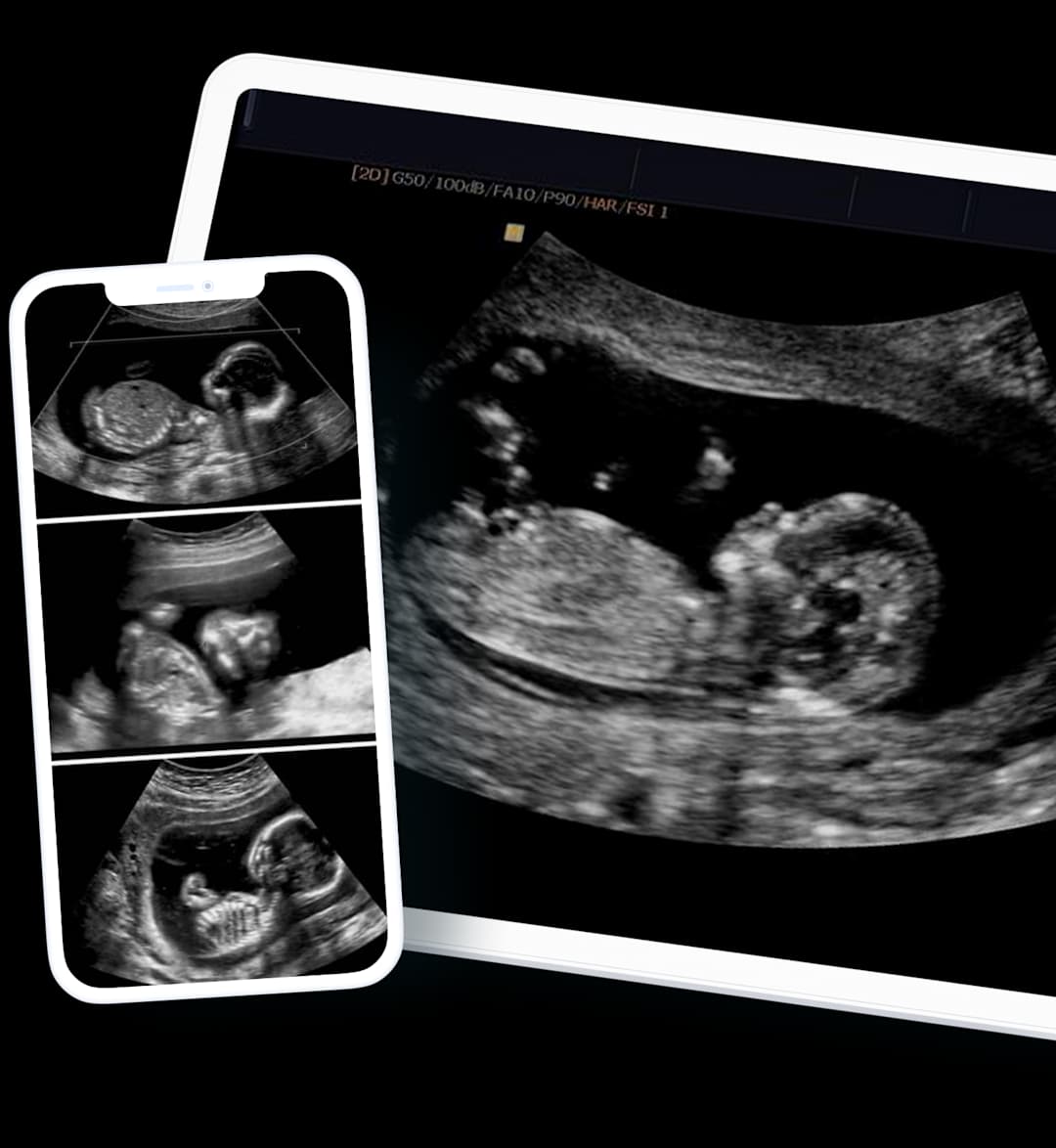
We provide insight on a range of topics, including the latest news affecting our practice.

Dr Tahir Hussein · May 2, 2023
Testicular ultrasounds are a safe and non-invasive way for doctors to assess and diagnose abnormalities in the testicles. If you’re anxious about the procedure, don’t worry—it’s natural to feel that way.

Heba Alkutbi · February 8, 2024
Pregnancy is a journey filled with moments of joy and anticipation, and the anomaly scan—or anatomy scan—is a significant and exciting milestone. This article will guide you through what an anomaly scan is, what to expect during the procedure, the findings you might encounter, and how to interpret the results.

Heba Alkutbi · April 23, 2023
A commonly used test is the Non-Invasive Prenatal Test (NIPT), also known as the Prenatal Test. The test is designed to screen the foetus for genetic conditions and chromosomal abnormalities.

The team at Harley Street Ultrasound Group is made up of Specialist Consultants and Specialist Sonographers you can rely upon. They are among the best in the industry.
This is backed up with a full range of qualifications and accreditations. All of our specialists are fully registered with all applicable medical regulatory bodies.





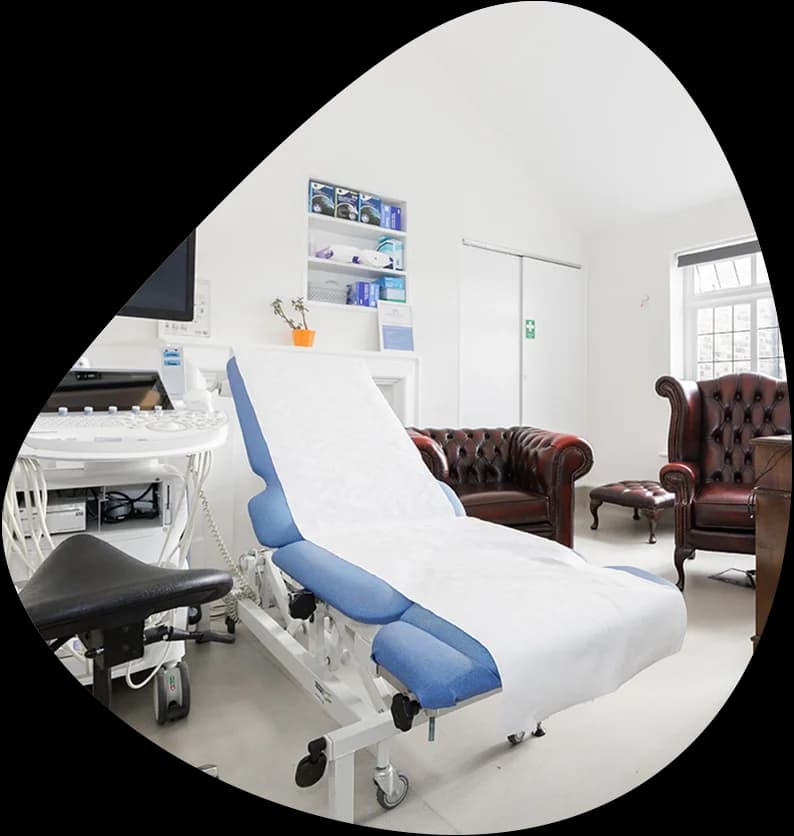
We are committed to providing a high standard of care to our patients. Take a look at some of the incredible responses we have received.